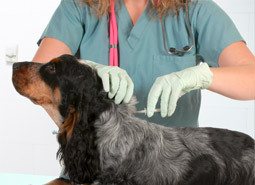
A wide range of NZ made ID tags for cats, dogs, ferrets etc!
ID tags
(sales support petsonthenet

 Home - click our doggie or moggie to go home


www.petsonthenet.co.nz

    Home  Free Lost & Found Ads  Pets for adoption / wanted   Help Us  Contact

Desexing 

 
Home


ATTENTION KIDS & PARENTS
This page provides professional vet medical advice on ALL aspects of animal health, including reproduction. 

Kids, please ask an adult to help you with this section.

Pets on the Net is a family friendly site and we advise guidance through this specific section.


 Desexing your cat or dog. 
Why?
What happens?


Pets on the Net, Pet Post, and just about every animal welfare organisation/shelter in New Zealand advocate the desexing of your pets....

Vet, Steve Merchant, takes the mystery out of the process, telling you, why and when it's done, what happens and all about recovery etc. Steve helpfully uses both the correct terminology as well as the "every day terms" for ease of understanding


Desexing goes by many terms in NZ including...
Spay / Spey - often misspelt! (female)
Neuter (male)
Desex (male and female)
Sterilise
"fix"


What is desexing?
This is a surgical procedure commonly performed on a female dog for many reasons, the most common reason being to sterilise her, i.e. permanently prevent her from becoming pregnant. The procedure itself involved surgical removal of the ovaries and uterus (womb).  This is known correctly as an ovario-hysterectomy.


When should your dog be desexed
Although this procedure can be performed at a great range of ages, it is most commonly done between 4 - 6 months of age (i.e. before their first heat) in New Zealand.

Under 3 months old their kidneys, liver and internal organ function is not fully developed and hence elective anaesthesia is not recommended. Elderly dogs of course have slowed down kidney, liver and internal organ function and hence are an increased anaesthetic risk. The younger a female dog is desexed, the less developed the reproductive tract is, and the safer, more simple and less complicated, less risky and less lengthy the surgical procedure is. Hence 4-6 months is ideal, it is also young enough to prevent any of the problems below and avoids them coming into their first oestrus unbeknownst to their owner and getting pregnant before owner awareness.  A female dog can be spayed pregnant but there are safety and ethical considerations associated with this.
 

Why your dog should be desexed
The benefits of this are firstly to prevent unwanted pregnancies, and the associated risks of birth, (which include needing a caesarean section) and of course contributing to the unwanted homeless stray dog population problem. 

The next most common reason is the elimination of hormonal related secondary sexually dependant behaviour, such as interfemale aggression (aggression towards other female dogs), bleeding every six months when in oestrus (i.e. on heat), having every stray male in the neighbourhood hanging around your property and escape attempts in order to get to the male dogs.

 It also prevents pseudopregnancies, i.e. false pregnancies, which can be very deceptive, lengthy and difficult to manage and resolve.  In this situation they have the pregnancy hormones mimicking pregnancy, so behave as if pregnant - nesting, treating objects as puppies, become mopey, depressed, off food and often right to the point of producing milk!!

A more life threatening condition prevented by spaying is pyometra, an infection of the uterus that can cause septicaemia and septic shock, potentially leading to death or fatal irreversible kidney failure.

Naturally, desexing eliminates the possibility of uterine cancer. If spayed prior first oestrus it greatly reduces the possibility of mammary gland (breast) cancer.  This benefit of breast cancer prevention is lost after 4 oestrus cycles.
 

The desexing procedure
Prior to surgery, assessment & preparation
The surgical procedure itself does not routinely require over night hospitalisation, instead they usually just stay for the day - in the clinic early in the morning and home that same evening.  It is important that dogs undergoing and anaesthetic have not had food or water for 12 hrs first to ensure and empty stomach (as with humans) to minimise the risk of vomiting under anaesthesia and inhaling the vomits (causing anything from mild to life threatening pneumonia to instant drowning).

Once here your veterinarian will perform a pre anaesthetic exam – full clinical examination, to ensure they are well and fit for the anaesthetic and surgery, sometimes during and sometimes after admission. Ideally then blood will be taken to run pre anaesthetic blood tests.  Many leading veterinary clinics will have the facility to run the blood tests in the clinic there and then for quick results, rather than sending them to an outside pathology laboratory and waiting up to a day for results.

The pre anaesthetic bloods test assess kidney function, liver function, hydration, proteins, the immune system, red blood cell levels (i.e. check for anemia) protein levels needed for healing and a clotting factor, amongst other things. This ensures that a dog is in an optimum (at the very least adequate) physiological condition to cope with the anaesthetic and surgery. It can also pick up underlying conditions that influence the anaesthetic and surgery, enabling your vet to manage and treat accordingly.

Anaesthesia 
Routinely a vet will then administer a pre anaesthetic sedative and pain relief combination to reduce stress levels and reduce the amount of anaesthetic used to induce anaesthesia (i.e. to put under anaesthesia). High stress levels and high induction anaesthetic doses make for a less safe anaesthetic. Pain relief given in advance calms a dog and gives better results than pain relief given once the surgery in underway.
 

Once the pre anaesthetic medications have taken effect your vet will then routinely use an injectable induction agent (i.e. anaesthetic that puts your dog asleep) through the cephalic vein i.e. main vein of your arm that is used in humans for blood testing etc. 

Now under anaesthesia, i.e. asleep, a tube is placed into the trachea (windpipe) to protect the airways and allow administration of the gas maintenance anaesthetic agent. The injectable induction agent lasts from 2-15 minutes, depending on which one is used, so a gas anaesthetic that is breathed in is needed to keep your dog asleep under anaesthesia  - i.e. maintenance anaesthetic agent, as with humans also.

Monitoring during surgery
At this point careful and complete anaesthetic monitoring should be instigated. This involves the use of pulse oximetry, a machine that is clipped gently on to the tongue and gives information of the heart rate and rhythm and level of oxygen saturation  - i.e. how well and how much oxygen is getting into the body via the lungs and circulating through the body, as well as reassuring us that the heart is coping well with the anaesthetic. 

An apalert is routinely used also at most practices, this is an apparatus attached to the anaesthetic machine that monitors respiration (breathing), informing the anaesthetist of respiration rate. At the same time a fully qualified experienced surgical nurse is monitoring the depth of anaesthesia and the patient by assessing varying reflexes and the patient as a whole, relaying this information back to the veterinary surgeon. This anaesthetic monitoring is performed for the full duration of the anaesthetic. One may even monitor blood pressure throughout the anaesthetic, but this requires equipment seldom found in general practice. 

Surgical preparation
Now your dog is ready for surgical preparation. This involves clipping the hair off over most of the ventral abdomen –i.e. underside of the belly and the skin cleansed very thoroughly with specific surgical preparation scrubs. They lie in dorsal recumbency (i.e. on their backs, belly and face up) on comfy padding for this surgical procedure.

At this point your veterinary surgeon may administer an antibiotic injection. Some special care/unwell or compromised dogs may also receive intravenous fluids by intravenous drip while under anaesthetic during the surgery.

Your veterinary surgeon will scrub clean his/her hands and arms as thoroughly with similar surgical preparations until the skin is sterile and will then carefully put on fully sterilised full length surgical gown and sterile surgical gloves.

Now, once in theatre sterile drapes will be placed over the entire ventrum (belly and probably chest as well), with only the surgical site (place where surgery will be performed) exposed and a kit of fully sterilised surgical instruments provided to your vet. Surgery is now ready to commence!!

Surgery
The abdomen is opened up carefully along the midline, usually starting to the umbilicus, the ovaries and uterus carefully identified, correctly tied off and all blood vessels well ligated (tied off) to prevent bleeding, The abdominal muscle layer, then the subcutaneous layers are individually sutured (stitched) closed again with dissolving sutures (thread).  The third layer to close up of course being the skin - the sutures you as owners will be able to see, usually sutured using non dissolving suture so that removal will be necessary 10-14 days later once all has healed. 

Waking up from surgery and monitoring after surgery. 
The surgery is now complete, and your dog will now be taken off gas anaesthetic and allowed to awaken, come round out of the anaesthetic in her own time. The endotracheal tube – i.e. tube in protecting the trachea (windpipe) is removed once she is swallowing and starting to chew, in full control of her own airways. She may also receive and additional pain relief injection at this point.

She is of course kept very warm and carefully monitored throughout her recovery and for the rest of they day, keeping a special eye on her colour to confirm there is no internal bleeding.

Going home
Once fully awake and had time to recover your dog will be customarily ready to go home that afternoon or evening.

Sometimes, although not routinely, she may go home with a course of antibiotic and /or pain relief tablets.

Stitches out
Usually a dog will be seen back 10-14 days later for sutures to be removed and post operative healing assessed a final all-well check up, so to speak.

Ask your veterinarian about spaying your dog now - It may be one of the best things you will do for her!!!


Dr Steve C. Merchant
B.V. Sc (Distinction)

Did you know...   ($$$ and desexing your cat or dog)

> That in cases of Genuine Financial Hardship, you can apply for financial assistance from the Humane Society to desex your pet?

> Ellenco Pet Medical Plans will cover part of the cost of desexing on two of their five plans, see Ellenco for details and conditions.

> SPCA's, Humane Society and many shelter pets for adoption are usually already desexed, or come with a voucher to assist with desexing costs. 

There is a set donation to pay the shelter. For example Auckland SPCA charges only $75 to adopt a desexed, deflead, wormed and vaccinated kitten - and you're supporting a good cause! For pups, Auckland SPCA charge up to $175, (it is more expensive again to desex a dog as opposed to a cat) but that includes all of the above, plus the first years registration...and that is regardless of sex, breed and size of breed!

So before you buy a moggie or doggie (see a registered breeder for a pure breed), look to your local SPCA or animal welfare shelter for savings on desexing and adoption costs. And you'll be saving a life!


Pets on the Net

(PS Shelters reserve the right as to who they will adopt a pet to, you'll need to meet their specified requirements, prior to adoption. Just paying the adoption fee does not mean everyone is a good, or breed appropriate, owner. Each shelter will discuss it's own policy, specifications and applications with you, prior to adoption)


Find pet friendly accommodation at Pets Can Come Too
petscancometoo.co.nz

Get your ad in this spot and advertise
all year on petsonthenet for just $99

New on PetsontheNet
Christchurch Earthquake
Lost and found pet advice, Worries about pets without food or water, Christchurch based counsellor comments, Links and useful articles, Success stories.

Pet Related Businesses For Sale
New classified ads section

New Doggy Daycare section
Advertise, or find one here!

A Guide to Finding Pets
Published in New Idea June 2010

Found a turtle?
Advice for found turtles plus FAQ.
Do you know what a scute is? How do turtles drink? Find out here!

New Cesar Millan book coming
"Cesar's Rules.Your Way to Train a Well-Behaved Dog". Pre order now.

The Practical Dog Listener
by Jan Fennell. Book Review


Cat found after over two years
Via petsonthenet.co.nz

Make a free temporary ID tag
for your pet

Order a "proper" one, while you're there...!

Send any old keys to Lonely Miaow And help open the door to their new shelter

Half a day left
& Whole and Well
Pet loss and grief related poems


Books  
from Fishpond   
 
(sales help support petsonthenet)   

Cesar's Rules
  NEW! Cesar Millan book
"The Natural Way to a
Well-Behaved Dog"


The Dog Listener
  The Dog Listener: Learning the Language of Your Best Friend
 

   Petsonthenet Links    

 Home    Lost Pet Advice  /  Lost & Found Pets - Free Ads  /  Found Pet Advice  /  Police advice   /  Success Stories
  SPCA locations  /  Animal Control  /  Shelters and breed rescues 
  Pet Services Directory  /  Pet Retail Directory   /  Links    /   Breed Identifier  /  Event Calendar for Pets  /   Books   /   Animal Law
  Pets for adoption  /  Pets wanted to adopt  /   Scams   /   Desexing   /  Microchipping for cats & dogs etc  
  Pet Insurance Volunteer Centre  /  News  /  Poems and Prayers for Pets  /  Pet Loss and Pet Grief   /  Memorial Garden for Pets
  ID tags  /  Max & Rastus Tribute  /   About Us  /  Awards  /   Help Us  /  Terms of Use  /  Privacy Policy   /   Advertise with us   /  Contact Us  

 
Please help support this free service

 
 Your Banner
 
    
  petsonthenet.co.nz is a proud member of Family Friendly Sites


Users of this site agree to abide by our conditions of use and our privacy policy.  © All on this site is copyright to Pets on the Net Limited, 
unless otherwise attributed. Pets on the Net® and Nga Mokai runga te Kupenga™ are trademarks of Pets on the Net Limited.


Pets on the Net  www.petsonthenet.co.nz  E-mail mail@petsonthenet.co.nz  More contact details...